Leave the firearm case closed when you arrive in the parking lot. If you are unsure where to go or when to bring your equipment inside, ask the staff first. There is no need to unpack beside the car while trying to work out the club's routine.
A first visit comes with enough unfamiliar details already: check-in, orientation, equipment rules, and the commands used on the range. Sorting out a few things beforehand leaves you free to listen once you get there. The visit can be short. You do not have to try every activity or bring every accessory you own.
Call before you pack
Read the club's current visitor information, then ask about anything it does not explain. Find out whether you need a booking, which documents to bring, and whether first-time visitors attend an orientation. Check the arrival time as well as the session time. They may not be the same.
Ask about the equipment and ammunition permitted for your planned visit. Do not assume that a rule from another range applies here. If you are borrowing or renting equipment, confirm the arrangement before arriving, including what instruction is available.
It helps to write the answers down. Keep the club's number with your booking details so a last-minute question does not become a search through old messages. If you are bringing someone along, check the visitor arrangements for that person too. Avoid making promises about participation until the club has confirmed them.
Bring a manageable amount
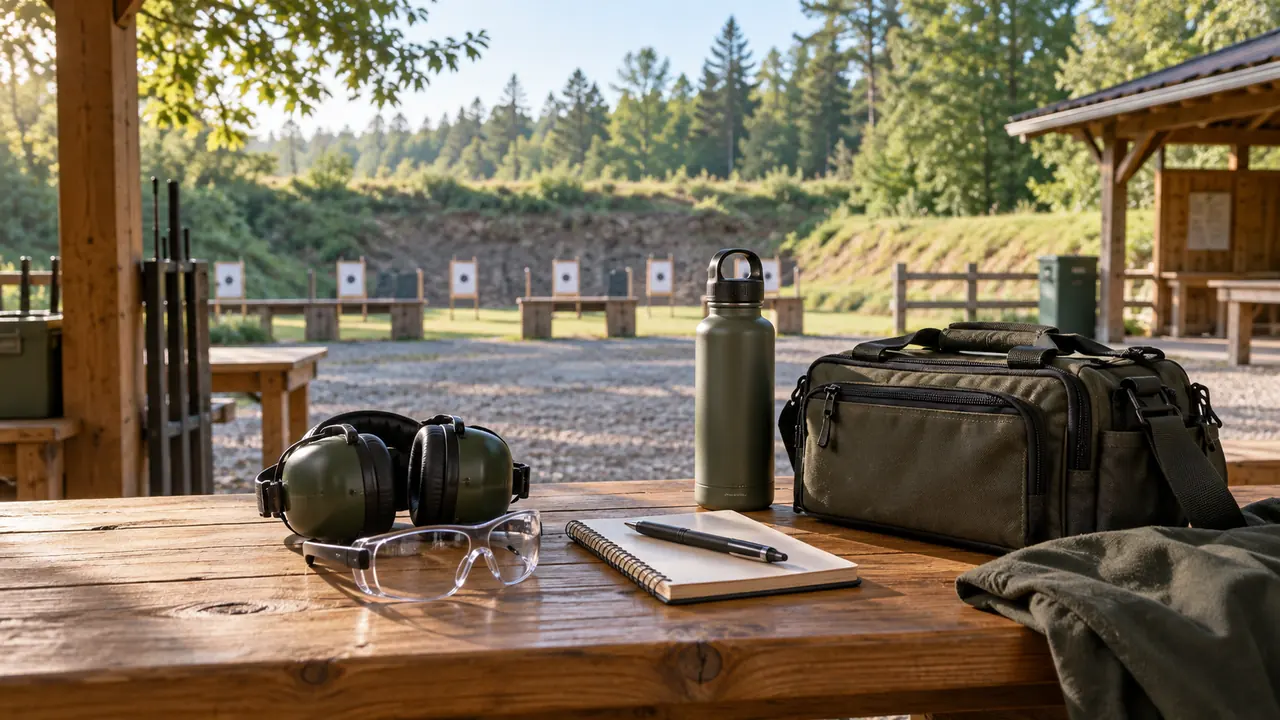
Pack for the session you have arranged. Required documents, approved eye and hearing protection, and the equipment the club has agreed you may bring should come first. Put paperwork somewhere accessible. Check-in becomes awkward when the requested form is underneath everything else.
Follow applicable transport requirements, the manufacturer's instructions, and the club's arrival procedures. Ask about any uncertainty before leaving home. Keep equipment securely contained during the journey, and do not handle a firearm casually while traveling or waiting to enter.
A bag with separate places for small items is useful, but it does not have to be elaborate. You should be able to find your hearing protection without spilling targets, loose packaging, and personal belongings onto a bench. Leave unfamiliar accessories for another visit unless they are needed for the instruction you have booked.
Check protective equipment while it is quiet
Try your eye protection at home. Make sure it fits properly with prescription glasses if you wear them. Notice whether it slips, presses uncomfortably, or interferes with your other equipment. Ask the club for guidance if you are unsure whether it meets their requirements.
Give hearing protection the same attention. Learn how to fit and use it according to its instructions before you need it. If it has electronic features, check the batteries. Those features do not remove the need for suitable protection or a proper fit.
Comfort matters because you need to keep protection in place where required. A problem that seems minor in a quiet room can become a distraction during the session. Bring it to the staff's attention before entering the active area rather than trying to work around it on the line.
Tell the staff this is your first visit
Say so at check-in, even if you have used other ranges. “I've shot elsewhere, but I haven't been here before” gives staff useful information. They can explain local procedures without having to guess what you know.
Listen through the orientation. Pay particular attention to where equipment may be handled, how the range officer communicates, and what you are expected to do when the line changes status. Ask for an explanation of any unfamiliar command before the session starts.
There is no advantage in pretending to understand. A brief question at the right time is easier to deal with than a mistaken assumption later. Do not use the behavior of the person beside you as a substitute for instructions from the range officer.
On the firing line
Follow the range officer's commands and remain aware of both spoken instructions and visual signals. Keep your attention on the session instead of your phone or a conversation behind you. If you miss an instruction, stop and ask for clarification.
Keep the firearm pointed in a safe direction and your finger off the trigger when you are not shooting. At a cease-fire, stop shooting immediately and follow the range officer's directions. Do not resume handling equipment because someone nearby starts doing so. Wait until the range officer says it is permitted.
If something goes wrong with the firearm, maintain a safe muzzle direction and notify the range officer. Do not turn around with it to show somebody the problem. As a new visitor, ask for assistance rather than attempting an unfamiliar remedy on your own.
Avoid rummaging through belongings during a pause when equipment must be left alone. The club's rules determine when you may handle items, move forward, or collect anything. If you do not know whether an action is allowed, ask before doing it.
Finish before you become worn out
Noise and concentration can make a first session tiring. Take that seriously. Tell the range officer if you feel overwhelmed, are struggling to follow commands, or need help ending the session safely. There is no requirement to stay simply because you brought more ammunition.
When you finish, follow the club's procedure for making equipment safe and putting it away. Keep paying attention through this part of the visit. Being ready to leave is not a reason to rush the final instructions.
Clean your station when the rules and range officer permit it. Use the designated disposal arrangements, and ask about anything you are unsure you should collect. Check for your documents, glasses, hearing protection, phone, and cases before leaving.
Later, make a short note about what would improve the next visit. Perhaps the eyewear needs adjusting, or the documents need a better pocket. There is no need to buy a whole new setup. Fix the specific inconvenience you encountered, and confirm your next visit with the club.

Comments