Rain on the car window is a good reason to check the club’s message before setting off. Your booking may still be going ahead, but the arrangements for an outdoor session can change with the conditions. A forecast on your phone cannot tell you whether a particular range is open or where staff want visitors to wait.
Confirm that first. Then pack for the visit the club says it can accommodate. There is little value in preparing for a long outdoor session if the activity has been shortened, moved, or canceled.
Ask about the arrangements, not just the weather
Check the club’s current notice or contact the office. Ask whether the planned session is running and whether there are any changes to arrival, parking, or access. If you are attending instruction, find out how the instructor will communicate a last-minute change.
Do not assume that a covered firing point means every part of the visit is under cover. You may still need to walk between the car, reception, and the range. Equally, do not invent restrictions from a weather forecast when staff can explain the actual arrangements.
Keep the club’s contact details handy. If travel is delayed, let the staff know rather than arriving late and trying to join a session without checking in. An uncertain first few minutes are avoidable when the office knows you are coming.
Pack so you can leave the bag closed
Sort documents and personal items before leaving home. Put the things needed at reception in an accessible pocket. That saves opening the main bag outside just to find a form, especially when the ground is wet and there is nowhere convenient to set it down.
A small waterproof pouch can keep paperwork dry inside an ordinary bag. Test the closure before relying on it. Keep a dry cloth and any spare clothing separate from equipment so that a wet jacket does not leave everything else damp on the journey home.
Follow the club’s instructions and applicable requirements for transporting firearms and ammunition. Weather does not create an exception to those arrangements. Keep cases closed during arrival and ask staff where equipment may be unpacked. The parking lot is not a place to improvise a handling area because you are trying to escape the rain.
Choose clothing you have already tried
A waterproof layer is useful only if you can move comfortably in it. Try the jacket over the clothes you intend to wear. Check whether the cuffs catch on anything, whether pockets are reachable, and whether the fabric bunches when you raise your arms.
Follow the range’s clothing and footwear rules. Choose footwear suitable for the surfaces staff expect you to use. If a route looks slippery or waterlogged, ask about another route rather than taking a shortcut through an unfamiliar part of the facility.
Consider the temperature as well as the rain. A heavy layer that leaves you overheated can be as distracting as clothing that lets you get cold. Bring a spare layer if it suits the planned visit, but keep the bag manageable. You do not need to carry a complete change of equipment for every possibility.
Check how protection fits with the extra layers
Try eye and hearing protection with the clothing you will wear. A hood, hat, or collar can change the fit. Follow the equipment manufacturer’s instructions and ask the range staff if you are unsure whether your arrangement provides suitable protection.
If glasses fog or become difficult to see through, stop and get assistance. Do not continue while trying to peer around them or remove required protection in an active area. Let the range officer tell you where and when you can deal with the problem safely.
The same applies to hearing protection that shifts when you turn your head. Fixing a poor fit belongs before the session or during an approved break. A pocket full of useful accessories does not compensate for protective equipment you cannot wear properly.
Keep the bench orderly
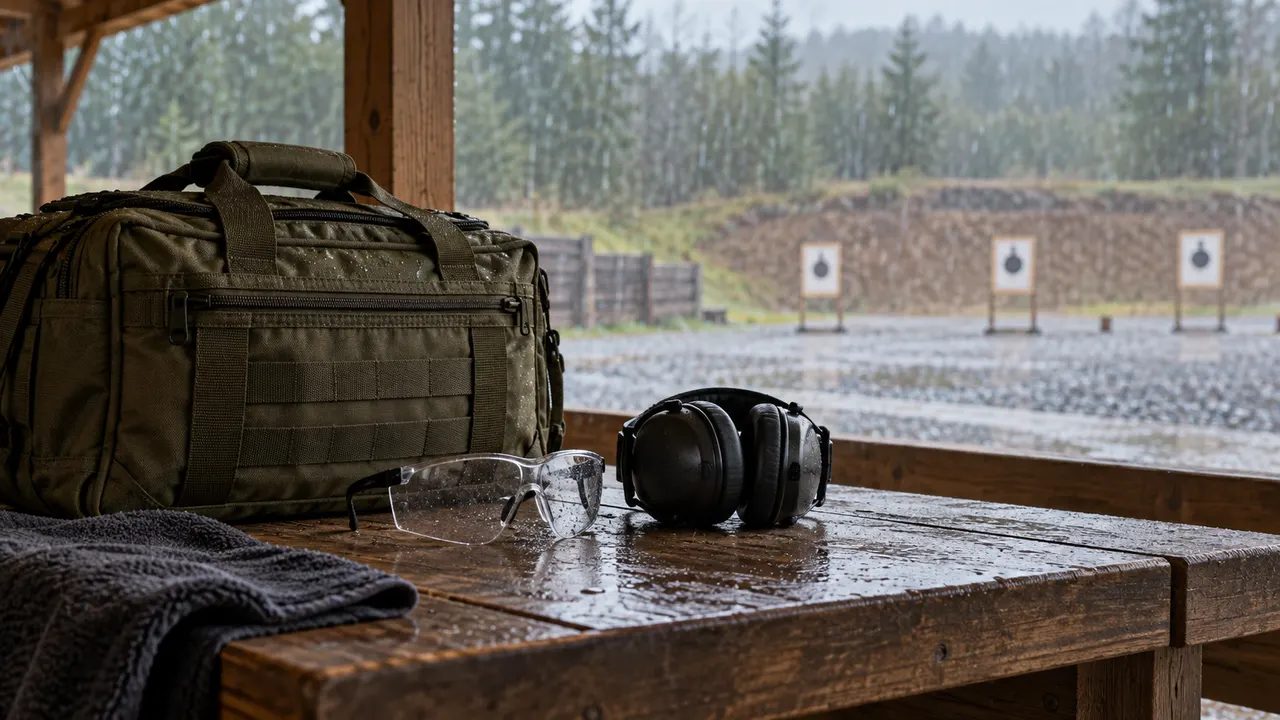
Use only the space and equipment arrangements permitted by the club. Keep cases, personal belongings, and unnecessary items out of the way. On a wet day, an untidy station can become harder to manage because there are fewer dry places to put things.
Do not spread bags or clothing over equipment in an attempt to shelter it without checking with staff. Keep your attention on the range officer’s instructions. If conditions change, stop when directed and follow the local procedure; do not finish what you were doing first.
Maintain a safe muzzle direction and keep your finger off the trigger when you are not shooting. If equipment develops a problem, tell the range officer. Rain, haste, and frustration are poor reasons to attempt an unfamiliar fix. Ask for help and follow the instructions you are given.
Take a break when you need one. Wet hands, cold clothing, reduced visibility, or difficulty concentrating are things to report, not inconveniences you have to ignore to make the trip worthwhile. The session can end earlier than you expected.
Leave time for packing and checking afterward
Follow the range officer’s directions for making equipment safe and putting it away. Keep listening while you pack. A rush to reach the car can undo the care you took during the rest of the visit.
Before leaving, check for documents, protective equipment, phone, cases, and other belongings. Deal with litter or cleanup only when staff permit it. If something has fallen into an area you cannot safely enter, ask for assistance instead of retrieving it yourself.
At home, follow the manufacturer’s care instructions for any equipment exposed to damp conditions. Do not leave wet clothing or a damp cloth shut inside the range bag. Let the bag and permitted accessories dry properly before storing them. Do not treat drying the bag as a substitute for checking the equipment itself.
Make a note of the one or two things that would have helped: perhaps a better pocket for paperwork or a jacket that fits more comfortably. Check the next booking with the club before assuming the same weather arrangements will apply. A shorter, well-organized visit can still be a useful day out.

Comments